Spiral

Spiral
Mindful awareness
Showing posts with label Attention. Show all posts

Monday, July 18, 2011

Benefits of Yoga

I have seen many of the popular press articles and some of the research articles (most are not very well controlled – unfortunately the studies are for the most part too poorly designed to make confident conclusions) espousing the benefits of yoga practice. Every body system, including endocrine, cardiovascular, and musculoskeletal is supposed to be positively affected by yoga in some way. Perhaps they are.

Exercise certainly will positively affect every body system. Many well-designed studies have removed doubt that the higher intensity the exercise the more one will benefit (up to a point that is not likely to be sustained by anyone but a few elite athletes). Unfortunately, few articles that claim health benefits of yoga compare asana practice (poses linked with breathing) to traditional exercise so no one can say for certain if yoga is as good as or more or less effective than a workout that includes cardiovascular exercise and resistance training. There also are many styles of yoga practice, some more likely than others to benefit all body systems. Of all the classes available on any one day in any city, most will not be as beneficial as a gym workout for any body system because of the difference in workload intensity.

I personally look to the gym where I maintain an elevated heart rate during cardio exercise and lift my maximum weight during resistance training (see previous blog posts) for physiologic benefits of physical activity. It is the mindfulness part of yoga practice that keeps me coming back to my mat. Turning inward to time by breath with body movement keeps me present the entire time I practice. Anytime my mind wanders off to the huge list of things I need to do or issues I need to resolve, I come back to my breath and alignment to maintain my mindful yoga practice. My poses are deeper when I’m aware and my experience is more awake and alive.  I finish my practice feeling like I’ve been to a spa or had a nap in a way that other physical activity doesn’t offer. My mind is still after a yoga practice and I feel ready to tackle the to-do list and unresolved issues with new clarity and vigor.

 My awareness practice on the mat also helps me to return to the present moment during my experiences off the mat. I have learned to tune into the present by being aware of each breath and of the sensations of each moment.  I have come to appreciate the difference between gulping tea without awareness and presence and drinking with attention to the aroma, taste, and sight of the drink. I stay with each sensation to take advantage of each moment, particularly when I am enjoying an experience. Why get a fabulous massage when I’m busy mentally running down my to-do list?! Why indulge in a decadent dessert unless I’m enjoying each bite with all my senses?!

 I’ll rely on my gym workout to benefit me physiologically. It is the awareness and mindfulness I learn from my yoga practice that I see as the valuable benefit of yoga.

Monday, July 11, 2011

Balancing Diets

There is certainly room for treats and sweets in a balanced diet. It just requires strength to keep the balance from tipping in a direction that is both unhealthy and likely to lead to weight gain. Eating a balanced diet is similar to parsva bakasana (side crow pose) variation in that way. Yoga students tend to think the pose is all about strength when in fact it is more about maintaining a precarious balance.

 There is a role for desserts in a balanced diet as long as they are eaten in moderation and planned carefully as a component of the entire days’ calorie intake. I enjoy nice wines and friends of mine serve fantastic wine. I know that when I plan to dine at their home in the evening I will need to balance my anticipated extra caloric intake through a careful meal plan for the rest of the day. Another friend bakes incredible desserts and I enjoy her vegan fruit pies. But I have trouble deciding between the choices when she invites me to dinner parties. So I plan for the dessert as I eat my other meals for the day then eat a very small portion of two different pies. These are realistic strategies to plan for sweets. It is neither realistic nor balanced to never eat desserts or fine wine at all.

Treats need to be considered special, not eaten with each meal. The problem with calling a food “good” (vegetables) or “bad” (desserts) is that we lose sight of a balanced lifestyle based on moderation. Once a dieter deprives herself of a certain type of food that she has labeled “bad”, she finds she craves it even more. The strength to resist is less important than a balanced plan. She will be more likely to over indulge on the forbidden food and spiral into a diet that is further from her goal. A meal plan that includes less healthy options as part of one’s lifestyle is more likely to be sustained than dieting that excludes any one type of food.

It has become more difficult to be mindful of portion size because food manufacturers have increased the packages of familiar treats. Coca Cola had been bottled as 6-ounce servings in the 1950’s. That is a moderate portion of a sweet treat. A single 6-ounce serving every now and then as Coke products were consumed in the 1950’s would not be a diet catastrophe. The problem now is that people consume 28-ounce bottles even several times a day. That is when a reasonable indulgence becomes catastrophic for a healthy lifestyle.

Tiny bite-sized candy bars can be a solution to curb a sweet tooth as long as we eat only two or three of them and put the rest of the bag in an inconvenient location (maybe in a box in the garage for the serious Snickers fan). To take time to enjoy the sweet makes it more satisfying than mindlessly polishing off the huge theatre-sized bar that will unbalance any meal plan.


Candy bars do not happen to tempt me; I’m more of a crunchy/salty type. So I don’t often purchase corn chips. If I do, I grab a handful and put the bag back in the pantry before I start to mindlessly plow through more chips than I needed. Another solution to control portion size is to purchase single-serving bags of chips.


We cannot sustain a diet that has drastically cut sweets, fats and salts without eventually feeling hungry and deprived, leading to later gauging. However, a diet high in sweets, fats and salts will lead to unwanted weight gain and potentially unhealthy insulin and lipid protein profiles. We each need to find balance by developing strategies that work for ourselves to reduce unnecessary calories (a number greater than the calories we burn in a day) without feeling deprived. It is a balance of consuming fewer calories from treats while enjoying each small portion.

Today I’ve enjoyed my lunch salad without rice crackers. I’m saving my sweet calories for some Ben and Jerry’s Berried Treasure sorbet. And when I do eat it on this hot evening I will take out only a couple of spoonfuls and enjoy each taste. Perhaps I need a little strength to resist eating the whole pint, but it’s really all about balance.

Tuesday, July 5, 2011

Freedom

Freedom has been the lesson I keep returning to this week, (not coincidentally) timed with the country’s celebration of its freedom from a relationship that did not work to the advantage of the colonies nor the English. I have explored many ways to deepen the feeling of freedom, or moksha (liberation), on the mat that have followed me off the mat.
  
Some students requested that we work on hip openers for our Independence Day practice. We worked to soften through the hips and pelvis to find a sense of ease in several asanas (poses), including gomukhasana (cow face pose) and in many lunges and standing poses including parivrtta trikonasana (revolved triangle pose). We worked toward eka hasta bhujasana (elephant trunk pose) and astavakrasana (eight-angle pose). But these two are not easy poses. Many students did not get into them and some of the students that did were unable to hold the poses for five breaths. This is where we are presented with the opportunity to free ourselves from our egos. Difficult poses like these offer important lessons to let go of the ego that tells us we need to “nail” each pose and let us explore the pose and experience it as our bodies offers it at this point in time. We are free to develop our practice and our attention as we challenge ourselves – where is the opportunity to develop if we never practice a pose we find difficult? 

Many yoga students are challenged by hip openers like these. Others find these poses easier and need to explore freeing their egos in other poses such as shoulder openers like garudasana (eagle pose) and arm balances such as bakasana (crow pose). Whatever our challenge pose is at the moment, it will challenge us emotionally and mentally as much as it will challenge us physically. The challenging pose will become easier if we surrender into it and soften our resistance, using our breath to move into it, rather than pushing, expecting, trying and doing.

So where have I applied these lessons to my life off the mat? As a chronic perfectionist, I’ve been working on freedom from finding perfection in myself, others, and events. It is not easy for me to let go of my ego that I wrap in perfectionism. But I am more aware of softening expectations, looking for the best possible outcome perhaps, but finding something natural and generally ok about imperfection. I’ve been lengthening my breath and releasing resistance to what is and accepting it with a free and open mind. Just as every asana isn’t going to be perfect, nor will every action off the mat. If I accept freedom to experience fluctuation on my mat then I need to soften and release perfectionism off my mat.  

We find more opportunities to liberate ourselves by releasing habitual thoughts and actions. Habits by definition are the easy way to function and lead to our reaching for a less healthy food option or automatically finding the negative in someone or something. It requires more mindfulness to interrupt a habitual pattern by reaching for a peach rather than a chocolate bar when we feel stress. It is hard work, but that is where the opportunity to develop ourselves comes from. True freedom comes from controlling and interrupting patterns and habits that don’t serve us. The founders of our country declared independence from patterns that didn’t serve the colonies. The freedoms they sought did not come easy but were rewarding, liberating, and enduring much as the benefits of our yoga practice can be for us. If we could only surrender and let go of our ego then we can be free.

Wednesday, June 29, 2011

The Many Meanings of Flexibility


People frequently comment on my flexibility. Often they refer to the way that my body can move and bend. Other times they refer to my attitude in accommodating unexpected obstacles and requests. I’ve found that life teaches each of us to be flexible. Often there is nothing else we can do but accommodate. Sometimes it is the weather, other times it is a business (especially an airline), and other times it is a significant other or colleague but each day we are required to veer off our planned course of action and be flexible and open to something else.

How willing I am to be flexible depends a lot on how committed I am to my original plan. But willing or not, I’ve got to budge. I believe that my yoga practice has helped me to be flexible – in both senses of the term. As I get on my mat and bend my body, opening hips, shoulders and hamstrings, I explore my flexibility both physically and mentally. I try to be open minded to what the asana (pose) will feel like during that particular practice. The same asana looks different from one day to the next. Even within the same day, my morning hanumanasana (monkey pose, or splits) and titibhasana (firefly) poses are never as deep as they are in the evening. But yoga practice teaches me to stay with the practice and accept the pose as it is at the time, regardless of the outcome.

Deciding to use yoga props is an example of using a flexible attitude to improve a flexible body. I might use a block one day although I didn’t use one the day before. Although the block itself accommodates physical flexibility, it takes flexibility of attitude to use a prop to experience the asana without ego interfering. For instance, it is easy to lapse into full-blown ego protection during a practice by telling myself “I can get into a full split without using a block so I won’t use one today”. But yoga has taught me that the practice of staying in the moment, using my breath to transition between and to stay in poses is what is important. Coming into an expression of any pose beyond what my body is willing to provide at that time has potential of straining a muscle or ligament, causing an injury. Repeatedly coming into an asana incorrectly or holding it with poor alignment because I haven’t prepared my body for the pose might make me prone to a painful and limiting tendonitis. None of these injuries is worth forcing a deeper expression of a pose than is available at the time. So it serves me well to be flexible in accepting the pose as it is available during that practice without expecting a certain expression of that pose.

Yoga practice requires that I stay with the process, without attachment to the outcome. This practice is important for proper alignment, awareness, and injury prevention on the mat and it also serves me well when life requires me to be flexible in attitude when I’m off the mat.

Wednesday, May 25, 2011

Comfort Balanced with Effort

Yoga practice is based on philosophy outlined in the Yoga Sutras, organized as poetic verses written in the 2nd century CE. Only a few of the 196 verses refer to the physical practice of asanas (poses) even though most Americans consider that the poses define the practice. Sutra number 2.46 does refer specifically to asanas, and even this message extends beyond the mat into our lives in the real world. This sutra has been translated to mean “It is essential that the posture be steady and comfortable”.  Any pose, then, should be performed in a manner that is challenging, yet relaxed in some way.

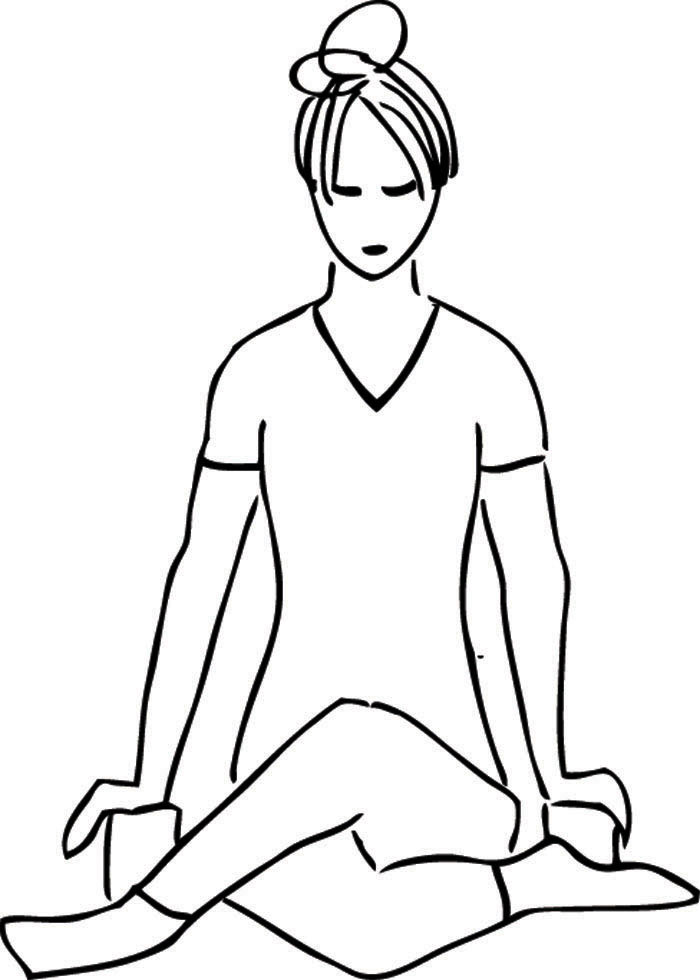
A pose as simple as sukhasana (easy sitting pose) has components of comfort and effort. One doesn’t sit rigidly in this pose as they begin a sequence or transition and rest between poses. There is more ease and comfort than rigidity. At the same time, the pose isn’t slouchy. The spine is erect and the spine is energized. The person in this pose is awake and alert.

The same duality applies to physically challenging poses such as natarajasana (dancer pose). This pose requires the person stand on one foot while holding the other leg behind the back with one arm and pressing into a bow shape with the back. This is challenging for balance, flexibility, and strength but it is also challenging to find comfort amidst all the effort. So many muscles must generate force to practice this pose. But many other muscles do not need to work. The jaw doesn’t need to lock and the teeth don’t need to clench. It is actually easier to balance if the toes don’t claw. Pulling the leg up too strongly will hike the pelvis and change the pose. So with all the effort of the pose, there will still be some ease and comfort.

This delicate balance between being alert yet relaxed occurs in our daily lives just as it does in asanas. We need to stay alert when we drive (and not use a phone – even with a hands-free device but I’ll save that lecture for another time) but we also need to have a certain amount of ease so that we can respond to unexpected obstacles and change course quickly if necessary. It requires some effort and control to chop vegetables yet there too, we need some ease as we do; we don’t use every arm muscle to dice a carrot. This balance extends to our relationships where we learn how much we need to give and how much to take in each one just as we learn which “battles to choose” with employees, spouses, and children.

More and more I find my life off my mat reflecting my yoga practice. I look to balance effort with comfort. I remind myself to back off when I push hard or to push when someone is taking advantage of me. This is just how a beautiful life should be lived: steady, comfortably, and in balance.

Wednesday, May 4, 2011

Benefits of Awareness and 100% Effort

My philosophy is that if I’m going to make time, whether it is 20 minutes or 90 minutes, to be on my mat then I’m going to make the most of it. I like intensity and focus that I put into my practice and my gym workout. Maintaining my attention on my body keeps my mind from drifting into crazy chatter that it does the rest of the day and that break is nice. But full effort also affords me all the benefits from the practice (or workout).

I can sort-of-kind-of be in virabhadrasana 2 (warrior 2 pose). You know what this looks like, a little wishy-washy. My front knee can be bent a little and my arms could be out to the sides but be soft and hanging limply because I’m not really aware of what I’m doing. Or I can choose to be in the pose completely with intention. This way my front thigh is parallel with the floor, my legs are working hard as I press them away from each other, and my arms are alive with activity. I’m not rigid, but all of my body is working completely, in the present moment, with all the effort that I can give. I’m going to be there for five breaths anyway, why not be aware, give it all I’ve got, and get the most out of it.

When I do manage 100% effort I’m more likely to have my muscles and joints aligned the way they should be. That alignment makes my muscles more efficient. If I want to develop muscle strength, mental focus, flexibility, balance, or any other benefit from practice then I’m most likely to get to those benefits if I’m completely aware and putting full effort into the pose.

Full effort also keeps me from injuring myself in the pose. It is when we are really thinking about something else that we get hurt. That is because we let the front knee cave in toward the inside of the foot and stretch the ligaments beyond what they should be. Or we can create cervical discomfort if the shoulder blades are riding high instead of anchored down on the back as they should be.

This intense mindful movement is important in the gym as well as on the mat. It is the moment I begin to think about the grocery list that I bang my leg with a dumbbell and bruise my shin (true story – happened last week). If I’m not thinking of alignment while I’m doing a set of flies then I’m likely to stress my shoulder ligaments and feel pain in the front of my shoulder. The ache might last a little while or it could end up being a serious injury, particularly if my inattention is habitual and I continually stretch the same ligaments. Injuries aren’t a badge of honor in the gym or on the mat. They mean that we didn’t do something right; we didn’t maintain awareness or we didn’t honor our body’s limitation that day.

Maintaining awareness for 100% effort on my mat and in the gym also helps me remain focused when I step into the real world. I get more from my relationships when I listen completely to what my friend is telling me. The intensity on my mat also helps me to stay focused when I’m doing anything else so that I am more likely to do it right the first time without errors. That happened last week, too. I breezed through the supermarket thinking about the yoga sequence I was planning to teach that evening and I left the store without a critical item.

No, I’m not able to put in 100% effort every single moment. But I do try. I’ve asked my yoga students this week to set the intention to put in 100% effort throughout the class. One woman learned that she compensates for weak abdominal muscles by using her shoulders in several poses. She realized that is why her shoulders are tight. Her devoted awareness during yesterday’s practice taught her a lot about how she uses her body and will help her get much more out of the time she already is committing to her practice. As long as she is on the mat, she might as well be there completely, 100%.

Tuesday, April 5, 2011

Transitions

Spring is trying hard to arrive right now. Where I live, some buds are on trees and some perennials are in bloom. But one day seems like spring only for the next day to turn cold again. I keep putting away gloves and hats only to take them back out again the following day. I love springtime so the transition seems like a good one to me. But still, enduring any change requires more effort than the status quo.

Life comes with many transitions, including relocating, entering or exiting relationships, and starting or ending new jobs and life roles. Sometimes people stay in relationships and work settings longer than they know they should if only because the change itself is so challenging.

Yoga has taught me that even through the impermanence of every situation I can find some stability in my breath and in the goodness of each moment. As in life, the transitions in yoga are least balanced. Moving gracefully from one pose to the next requires focused attention and long breaths.

I have worked on transitions this week by linking three standing poses: vrkasana (tree pose) into virabhadrasana 3 (warrior 3 pose) into garudasana (eagle pose). Any one of these poses is demanding so sequencing them together without letting the floating foot touch the ground is even more of a challenge. Still, once I am in any of these standing poses I can settle in and balance. Moving from one to the next is the tricky part. The best way I have found to approach the transitions is to acknowledge that there is something similar in each. I can build on the fact that the pelvis is level and the hip points aligned forward in each of the poses. The standing foot stays in full contact with the ground to provide stability. And my breath is with me always, helping me to focus and remain stable even as I move. I have learned to be graceful in these transitions by letting my breath move me and quiet my mind. I also am comforted in knowing that as much as one pose is different from the other, some components are constant among them.

Tools I have learned on the mat have helped me to endure transitions off the mat with a little more grace and focus. Even as things change, I love and am loved and life generally is very good. Breathing and focusing through it all makes life’s transitions a little easier. So I take another breath and pull out that winter coat again.

Monday, October 25, 2010

Steady Attention and Maintain Comfort

Yoga is about process, not outcome. But if there were to be goals in asana practice, they would be to steady one’s attention (sthira) and to remain comfortable (sukha) in the pose.  These qualities are what make yoga practice challenging and rewarding. Some poses are easier for some people than others. But every yogi can identify particularly challenging poses. Some of my students find savasana (deep relaxation pose) most challenging because quiet and total stillness is difficult and uncomfortable for them. Other students find eka pada rajakapotasana (pigeon pose variation) most difficult and uncomfortable because sitting so many hours in the day tightens the muscles around their hips and pelvis.

Often students seek classes that quickly move them from one pose to another. This might be right for their bodies some days. But it also helps them to avoid the hard work of settling into a pose and finding stillness there. I can’t help but wonder if these students are unconsciously avoiding the hard asana work of steady attention and maintained comfort while holding poses. It is in holding poses that yogis will be rewarded. Any action that is difficult brings greater rewards.

My role as their instructor is to create an encouraging and safe environment. Sometimes it means encouraging students to soften. In eka pada rajakapotasana I encourage students to breathe long, steady breaths to still their minds and soften the muscles around their groin and hips. Sometimes it means encouraging students to use props. Using props is a good thing in that they help students to attain sthira and sukha, providing students with greatest benefit from their practice. A blanket or block under the front hip in eka pada rajakapotasana may help the student to hold the position more comfortably, in turn helping her to sustain her attention rather than fidgeting to try to avoid the deep hip rotation that it requires.

There are no shortcuts in yoga practice. Reaping the true benefits of asana practice, steady attention and maintained comfort, requires settling into the poses. The discomfort can be assuaged by extending the breath and using props. But avoiding the hard work is never the answer.

Wednesday, September 22, 2010

Centered Stillness

I start all my yoga classes and home practices with at least 5 minutes of settling in to center the mind. Last night several students seemed apprehensive, fidgety, and not completely sold on the idea of using their precious time this way. I got the idea that they thought the time “wasted”. Or perhaps they are unfamiliar, therefore uncomfortable, with the stillness. We are all used to doing and are less likely to spend much of our time being. However, yoga practice is intended to be mindful, to slow us down, to find stillness in movement. That is what makes it yoga rather than stretching and calisthenics.

Focusing on deep breaths helps to transition from whatever happened prior to practice to time on the mat. Centering helps to still the mind and body, releasing any emotion - from anger and frustration to fatigue and elation - so that we can be completely present for our practice. Being centered prepares us to move mindfully. It can prevent us from being careless; something that often results in physical injury.

Centering is a yoga practice that I take with me into my life off the mat. It helps me to focus and be present for the activity I am about to start. A few breaths are all I need to transition from one emotion and place to the next. What would happen if you took time to center yourself before beginning a meal? How might your gym routine benefit if you transitioned from a stressful day at the office before starting weight training? How might a confrontational meeting with your spouse or teenager differ if you took time to center and find stillness breathing deeply for several minutes before the discussion?

Maybe with practice you can come to value time used to center and prepare your mind and body as you transition to the next activity. Maybe you can become more comfortable with stillness.

Monday, September 6, 2010

Moving and attention

Moving without attending to what we are doing can result in anything from vehicular homicide to a stubbed toe to a broken phone. We all have done three things at once without really paying attention to any of them - carrying too much upstairs to save a trip, I thought I was being efficient in making the most out of a trip up the stairs. Rather than efficiency, however, I end up dropping the smart phone in my hand and smashing its monitor. Not only have I not saved time, but now I'll need to have the phone repaired or replaced and I actually lose time in inconvenience while I don't have my phone. Another example - I wonder how much time I've really saved by sorting and reading the mail while something is on the stove only to burn whatever I wasn't watching closely and need to start the cooking over again. And certainly, no time is saved walking while we are doing three other things only to fall and injure a leg and end up in the emergency room waiting for x-rays.

The opportunity to practice mindfulness presents itself many times a day. Today as I juggled too many things in two arms I recognized that I was headed for disaster. I set things down, took a few deep breaths, picked up half of the items, and committed myself to two loads up and down the steps. Not only did I avert disaster, but I achieved what I needed to do with a more relaxed outlook. The task took only a couple of extra minutes but I felt more leisurely than the rushed feel of being overloaded.  

Now, to remember next time I feel overwhelmed to: Stop - Breathe - Attend to one thing at a time.